
Shifter stories have a special place in my reading life. I love them. I read them constantly. Packs, prides, clans, secret supernatural towns, broody wolves, chaotic bears, sarcastic foxes, dragon shifters with control issues. All of it works for me.
Until my brain decides to focus on the logistics.
Because the moment that happens, the entire illusion collapses.
At first it seems like a small question. A harmless one. The kind of thing that pops up in the background while the plot moves forward.
What happens to the clothes?
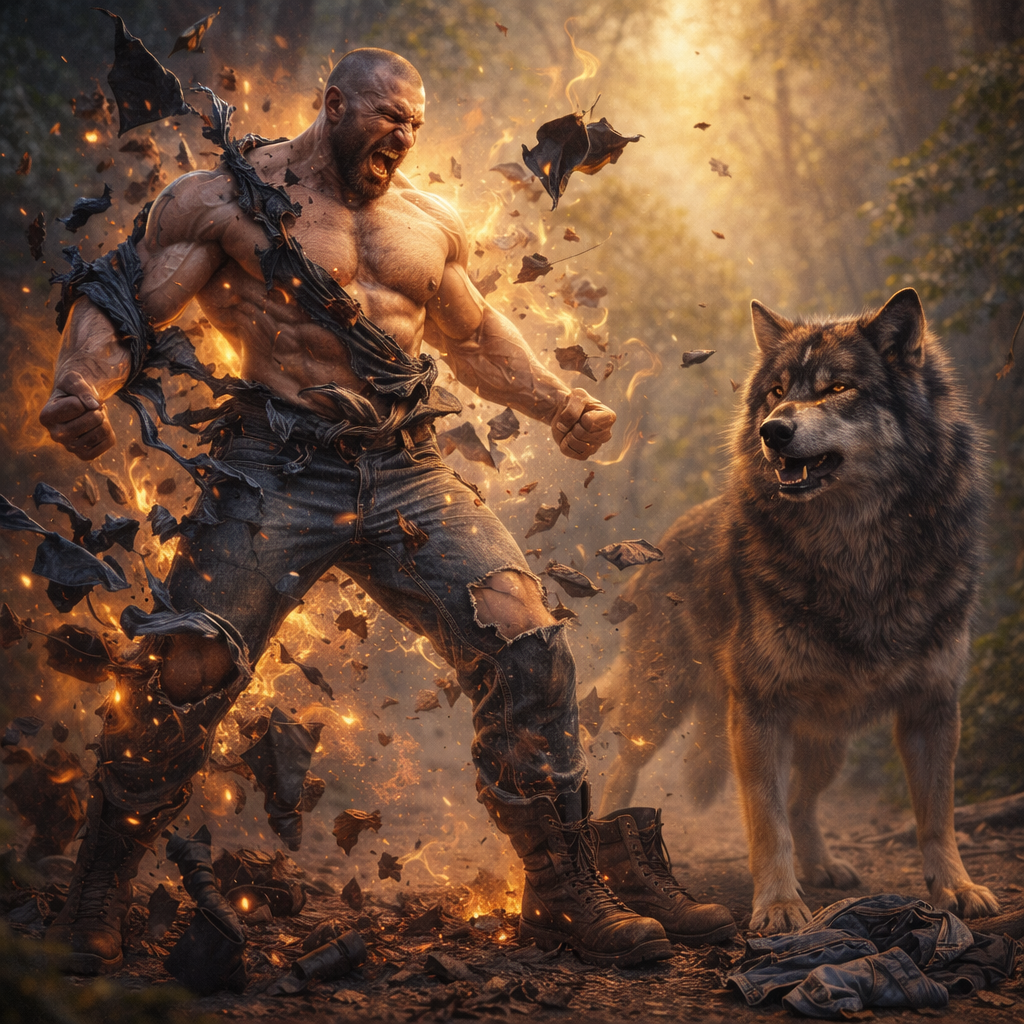
A character shifts into a wolf, a bear, a dragon, or whatever supernatural form the story requires, and suddenly I cannot stop thinking about the jeans. The shoes. The jacket. The phone. The pockets full of keys and lip balm and whatever else people normally carry.
Clothing logistics become a problem immediately.
The Clothing Problem
Some authors solve this by simply refusing to acknowledge it. A character shifts, runs through the forest for three chapters, then shifts back and somehow everything is exactly where it should be. Pants. Shirt. Shoes. Dignity fully intact.
Nothing tears. Nothing disappears. Nothing needs explanation.
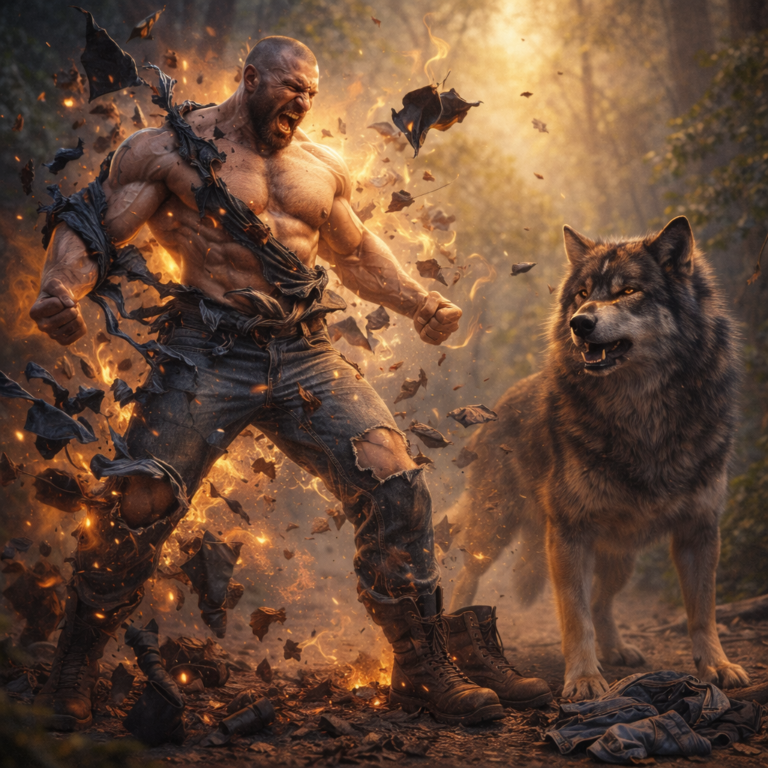
Other stories go in the opposite direction and lean fully into the chaos. Clothes explode dramatically during every transformation. Fabric shreds. Buttons fly. Characters return to human form standing naked in the woods with the calm confidence of people who apparently treat public nudity as a minor inconvenience.
This solution creates a second problem.
Someone now needs spare clothes.
A surprising number of supernatural communities seem to solve this by storing clothing everywhere. Cabins contain emergency sweatpants. Vehicles contain backup jeans. Pack houses apparently operate on the assumption that at least three people will spontaneously destroy their wardrobe every afternoon.
Entire closets must exist purely for post-shift recovery.
The supply chain alone would be impressive.
The Magic Pocket Solution
Some books take a third approach and quietly invent magical storage without fully explaining it.
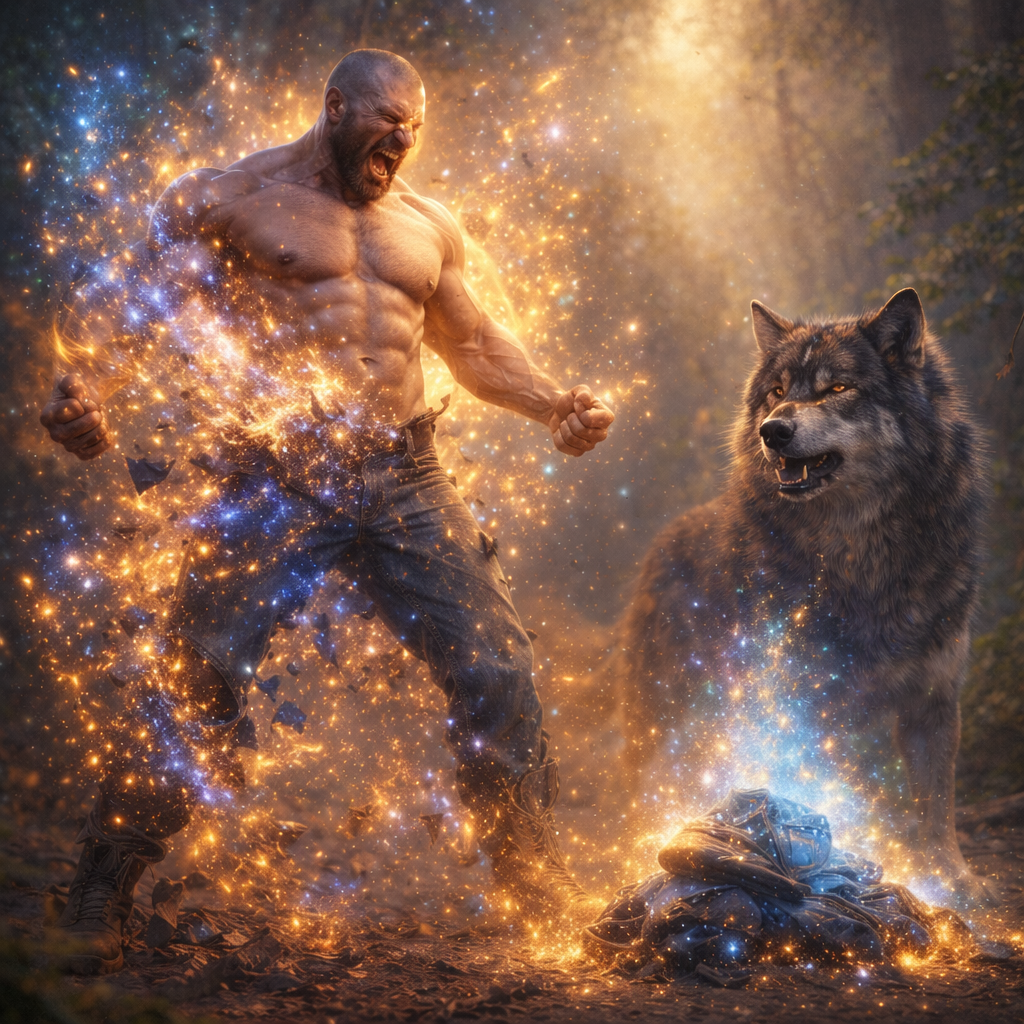
Clothes disappear during the shift and reappear afterward, neatly restored and completely intact. Phones return to pockets. Keys remain attached to belt loops. Jewelry somehow survives a full skeletal rearrangement without complaint.
No one questions it.
The story moves forward as if fabric and bone operate under the same set of supernatural rules.
At that point I usually accept the explanation because the alternative involves thinking too hard about structural engineering.
When the Brain Refuses to Let Go
The real problem appears once the question enters my head.
Because once I notice it, I start noticing it everywhere.
Characters shift while carrying weapons. Characters shift while wearing boots with complicated laces. Characters shift during high-speed chases, during romantic tension, during awkward public moments that would become dramatically worse if clothing suddenly ceased to exist.
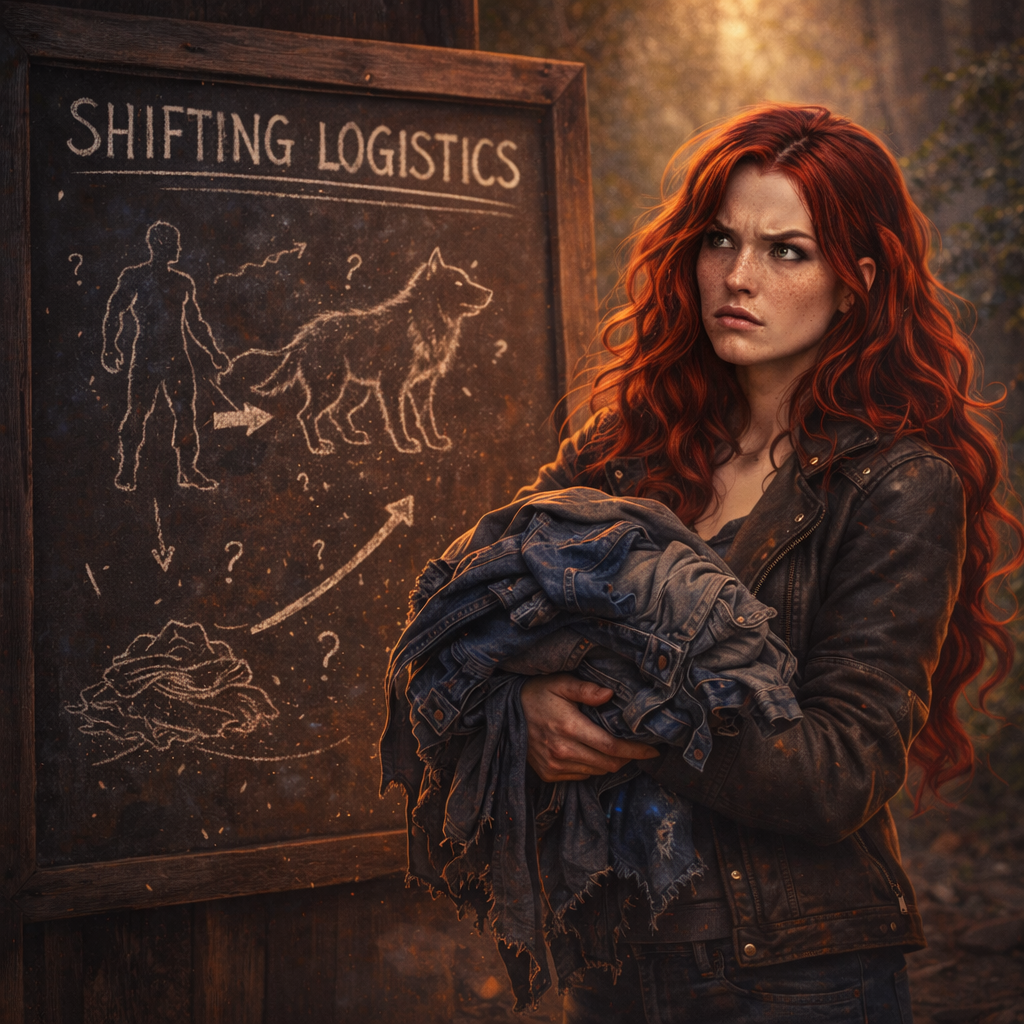
Every transformation scene becomes a small puzzle.
Did those jeans survive?
Where did the jacket go?
Why does this town apparently maintain a perfectly organized system of emergency sweatshirts?
None of these questions ruin the book. I still enjoy the stories. I still love shifter worlds and supernatural communities and chaotic pack dynamics.
But once the logistics appear, they never fully leave.
The Point Where I Just Accept It
Eventually I reach a quiet agreement with the genre.
Some questions simply do not need answers.
Shifter stories ask readers to accept magic, transformation, supernatural biology, and entire hidden societies operating just outside normal human awareness. Expecting perfect wardrobe continuity may not be the hill I need to die on.
So I let the jeans survive impossible transformations. I accept magically protected pockets. I trust that somewhere in the supernatural economy, someone manufactures a very large number of emergency sweatpants.
And I keep reading.
Because even if the logistics occasionally wobble, the stories themselves remain far too fun to abandon over a missing pair of shoes.
My Affectionate Roasting Codex


Now I want to know.
Did shifting logistics ever break your brain the way it broke mine? Did an author come up with a clever solution I missed, or are we all quietly pretending that supernatural communities just maintain enormous stockpiles of emergency sweatpants?
Share your favorite genre roasts!
Leave a Reply