
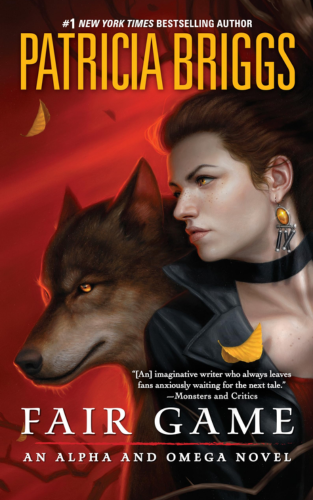
Fair Game by Patricia Briggs
It is said that opposites attract. And in the case of werewolves Anna Latham and Charles Cornick, they mate. The son—and enforcer—of the leader of the North American werewolves, Charles is a dominant Alpha. While Anna, an Omega, has the rare ability to calm others of her kind.
When the FBI requests the pack’s help on a local serial-killer case, Charles and Anna are sent to Boston to join the investigation. It soon becomes clear that someone is targeting the preternatural. And now Anna and Charles have put themselves right in the killer’s sights…
The Bite Breakdown:
Quick Verdict
Fair Game by Patricia Briggs is a tense, emotionally grounded urban fantasy that widens the Mercyverse lens, testing trust, visibility, and power without losing its character driven heart.
At a Glance
- Genre: Urban Fantasy
- Subgenre: Paranormal Fantasy; Political Fantasy
- Trope: Hidden World Exposed
- Series: Alpha and Omega Series Book 3; Mercyverse Universe Book 18
- POV: Dual Third Person
- Romance Focus: Medium, established relationship under external pressure
- Tone: Serious, tense, politically charged, emotionally controlled
The Premise (No Spoilers)
In Fair Game, the supernatural world is no longer safely hidden. Anna and Charles find themselves pulled into a situation where werewolves are no longer operating in the shadows, and that shift changes the rules for everyone involved. The story leans less on mystery solving and more on consequences, asking what happens when survival collides with public exposure.
What stood out to me immediately was the atmosphere. The tension does not come from constant action but from restraint. Every conversation feels weighted. Every choice carries political and emotional fallout. Briggs lets the discomfort linger, which gives the book a sharper edge than earlier entries in the series.
As a series installment, this novel functions as a pivot point. It is the third book in the Alpha and Omega series and the eighteenth book in the Mercyverse overall, and it shows the universe stepping into a more complicated phase. Long running threads begin to align around visibility, authority, and control, setting the stage for future conflicts that extend well beyond a single pack or territory.
What Worked
The strongest element here is emotional discipline. Anna’s growth continues in a way that feels earned rather than dramatic. She does not suddenly become fearless, but she becomes steadier. I appreciated how her strength shows up through perception, boundaries, and calm persistence instead of dominance. That restraint makes her moments of resolve land harder.
The political undercurrent also works extremely well. Briggs excels at showing power through systems rather than villains, and this book leans fully into that skill. The tension between cooperation and containment feels grounded and believable, which keeps the stakes high without relying on spectacle.
What Didn’t Work (or Might Not)
Readers looking for fast pacing or a mystery driven structure may find this installment slower. The plot unfolds deliberately, and much of the conflict lives in conversations, negotiations, and internal processing rather than action sequences.
The romance, while solid, stays firmly in established territory. If you are hoping for major romantic escalation or dramatic shifts between Anna and Charles, this book prioritizes stability over change. That choice works for me, but it may feel understated to readers who prefer higher romantic volatility.
Romance and Relationship Dynamics
Anna and Charles function as a united front here, and the romance is rooted in trust rather than tension. Their bond feels mature, protective, and quietly fierce. I appreciated that the story does not manufacture conflict between them for drama. Instead, it tests how a strong relationship holds up under external pressure, which feels far more satisfying at this stage of the series.
- Violence and injury
- Power imbalance themes
- Government control and surveillance tension
Who Should Read This
This is a strong fit for readers who enjoy urban fantasy with political weight, emotional restraint, and long form character development. If you like established couples, competent heroines, and stories that explore consequences rather than quick victories, this one will likely land well.
Final Verdict
Fair Game by Patricia Briggs deepens the Mercyverse without trying to dazzle. I finished this book feeling unsettled in a good way, aware that the world has shifted and there is no easy path back. It is quieter than some entries, but far more deliberate, and that intention carries real weight.
Overall Rating: 4 Stars
This book succeeds as a thoughtful, tension driven installment that strengthens the series arc and prioritizes consequence over comfort.
Heroine Strength: 4 Crowns
Anna’s power lies in steadiness and agency, and she continues to claim space without ever becoming passive or reactive.
Spice Level: 1 Flame
Low heat with off page intimacy. The romance is present but subtle, and easily skippable without losing narrative cohesion.
When the Rules Break
The ending lands hard because it strips away any remaining illusion that humanity’s laws are neutral or fair. When the victims are fae or werewolves, rape and murder are loudly reframed as acceptable collateral rather than unforgivable crimes. The system does not fail by accident here. It makes a choice. Justice is withheld not because the truth is unclear, but because the victims are not considered human.
That moral fracture is the real turning point of the book. The resolution does not offer comfort or correction. Instead, it exposes a hierarchy where humanity protects itself by redefining who deserves protection at all. Anna and Charles are forced to witness this line being drawn in blood, and there is no going back on what that choice reveals about the world they live in.
The long term consequence is seismic. The fae, having watched justice denied without hesitation, make their own decision in response. They stop playing by human rules. The social contract shatters, and the series crosses a threshold it can never step back from. From this point forward, humans are no longer (mostly) untouchable observers or default authorities. They are prey, and they are no longer safe. Humanity becomes fair game, and the Mercyverse shifts from uneasy coexistence into open reckoning.






Leave a Reply