

Book Reviews
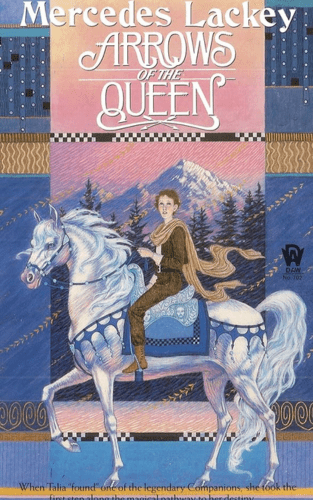
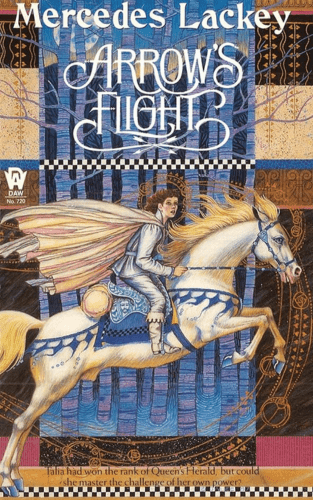
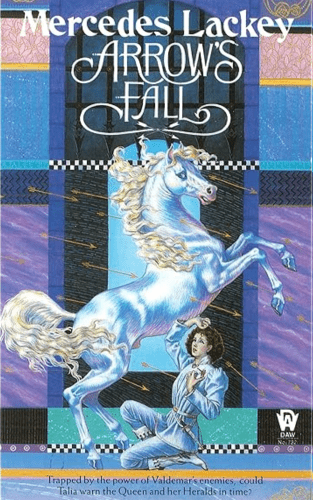
Mercedes Lackey is one of the (unofficial) “Grand Dames” of fantasy, and stands as one of the most enduring and influential voices in modern fantasy. For more than four decades, she has written stories that center character over spectacle, ethics over conquest, and women whose strength comes from choice, endurance, and responsibility rather than prophecy alone. Readers often refer to her as one of the grand dames of fantasy, not as a title of nostalgia, but as recognition of sustained impact, prolific output, and lasting relevance.
I first encountered her work in the 1990s, when Arrows of the Queen became one of the very first fantasy novels I ever read. That experience shaped my definitive reading years and played a major role in why I still love fantasy as deeply as I do. Valdemar did not simply entertain me. It taught me what the genre could hold. Decades later, I continue to devour every new book she releases in that world, a testament to both her consistency and her refusal to let her stories stagnate.
A Career Built on Character
Mercedes Lackey began publishing in the 1980s, at a time when epic fantasy still leaned heavily toward male centered narratives and conquest driven plots. From the beginning, she chose a different path. Her stories placed emotional consequence at the center of power and allowed women to anchor narratives without apology, novelty, or narrative punishment.
Her bibliography spans dozens of novels and multiple long running worlds, including epic fantasy, fairy tale fantasy, urban fantasy, and collaborative universes. Despite that range, her work maintains a clear through line. She writes about earned power. Her characters train, fail, learn, and choose again. Authority comes with obligation. Talent requires discipline. Survival demands integrity as much as strength.
Why Her Early Work Still Holds Up
Many fantasy novels written in the 1980s and early 1990s now feel dated. They relied on rigid gender roles, unquestioned power hierarchies, or emotional shorthand that modern readers struggle to overlook. Mercedes Lackey’s early work avoids most of those traps, which is why it continues to resonate decades later.
Her stories focus on interior growth rather than external dominance. Characters communicate. They reflect. They make mistakes and live with them. Women in her books hold authority without the narrative framing that authority as transgressive, comedic, or temporary. Trauma exists, but the story treats it as something to be worked through, not something that defines worth or narrative value.
Lackey also resists the cruelty and nihilism that marked much of the genre at the time. Her worlds acknowledge darkness without glorifying it. They prioritize empathy, accountability, and community, values that age far better than shock or spectacle. As a result, books like Arrows of the Queen still read as emotionally grounded rather than outdated, even to readers encountering them for the first time.
Perhaps most importantly, her heroines feel written rather than positioned. They do not exist to prove a point about women in fantasy. They exist to live inside their worlds, shaped by circumstance, choice, and consequence. That approach gives her early work a durability many of her contemporaries never achieved.
This longevity explains why new readers continue to find Valdemar, and why longtime fans keep returning. The stories do not ask for indulgence based on era. They stand on their own.
Valdemar: Ethics, Power, and Endurance
The Valdemar universe remains the cornerstone of Lackey’s legacy. It was the first world she created, and it remains the most expansive and philosophically rich. Rather than following a single hero through a fixed chronology, Valdemar unfolds across centuries. Each sub series introduces new heroes and heroines, new conflicts, and new moral pressures.
That structure keeps the world alive. No one legend dominates. History shifts. Institutions evolve. Women like Talia, Tarma, Kethry, Kerowyn, and Elspeth rise to meet different kinds of crises, each shaped by their own fears, values, and limits. The narrative never treats them as interchangeable. Their strength looks different because their choices differ.
Valdemar examines what leadership costs. It asks how much compassion can survive inside power, and what responsibility demands from those who accept it. These books reward patience and emotional investment, and they trust readers to care about growth rather than shortcuts.
Bardic Voices: Craft, Identity, and Quiet Power
The Bardic Voices series reveals another facet of Lackey’s worldview. These stories explore music as craft rather than ornament. Bards train rigorously. They travel, observe, remember, and serve as witnesses to history and emotion. Art carries weight, and using it well requires discipline and accountability.
The heroines in Bardic Voices rely on perception, emotional intelligence, resilience, and persistence. They influence rather than dominate. Their power often operates quietly, but it never lacks impact. Mistakes linger. Growth takes time. Success comes from mastery rather than destiny.
This series speaks to readers who value identity, skill, and the slow shaping of self. It reinforces Lackey’s belief that soft power still carries consequences, and that shaping a narrative can change lives as surely as wielding a blade.
Five Hundred Kingdoms: Agency, Subversion, and Comfort
The Five Hundred Kingdoms offers the warmest and most playful expression of Lackey’s philosophy. Set in a world governed by fairy tale tradition, these books examine what happens when narrative expectation pushes people toward prescribed roles and endings.
Rather than retelling fairy tales outright, the series interrogates them. Characters push back against scripts that do not fit. Heroines succeed through intelligence, preparation, kindness, and refusal to confuse tradition with inevitability. Narrative pressure becomes the antagonist, and agency becomes the victory.
This is a series I return to as a comfort read. The tone reassures without condescension. The humor never undermines competence. The stories trust that good sense, empathy, and skill still matter. That balance makes the Five Hundred Kingdoms a perfect counterpoint to Valdemar’s heavier moral weight.
Championing Women’s Stories Early
Mercedes Lackey championed women centered fantasy long before the market embraced it. From the start, she allowed women to lead nations, swear oaths, master crafts, and survive trauma without reducing them to symbols or side roles. Her stories do not reward suffering, but they do acknowledge it. Growth comes from endurance and choice, not from erasure of pain.
That commitment helped normalize female led epic fantasy and laid groundwork for many of the stories readers now take for granted. Her influence shows not through imitation, but through permission. She proved that women’s stories could anchor entire worlds and sustain them for decades.
Why She Belongs Here
Mercedes Lackey belongs on this site because her work aligns with its core values at every level. She writes heroines who earn their power. She respects consequence. She trusts readers to value growth over spectacle.
Valdemar, Bardic Voices, and the Five Hundred Kingdoms (along with her many other works) together form a body of work that rewards different reading moods without abandoning its principles. Whether exploring duty, craft, or comfort, Lackey remains committed to women who choose their paths and accept the weight of those choices.
That consistency explains why her stories continue to matter, and why they still invite readers to return, again and again, to worlds that refuse to let strength become shallow.