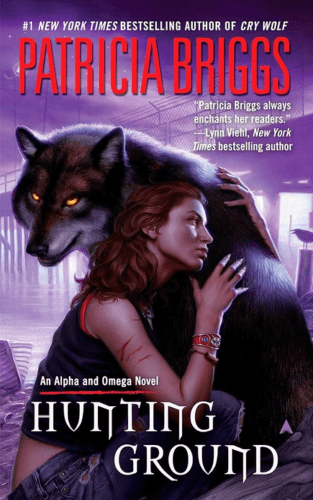
Hunting Ground by Patricia Briggs
Anne Latham didn’t know how complicated life could be until she became a werewolf and was mated to Charles Cornick, the son—and enforcer—of the leader of the North American werewolves. She didn’t know how dangerous it could be either…
Anna and Charles have just been enlisted to attend a summit to present Bran’s controversial proposition: that the wolves should finally reveal themselves to humans. But the most feared Alpha in Europe is dead set against the plan—and it seems like someone else might be, too. When Anna is attacked by vampires using pack magic, the kind of power only werewolves should be able to draw on, Charles and Anna must combine their talents to hunt down whoever is behind it all—or risk losing everything…
The Bite Breakdown:
Quick Verdict
A quietly intense, character driven installment that expands the Mercyverse in smart, unsettling ways while deepening Anna’s sense of agency and place within it.
At a Glance
- Genre: Urban Fantasy
- Subgenre: Paranormal Fantasy; Urban Fantasy Thriller
- Trope: Pack Politics
- Series: Alpha & Omega series book 2; Mercyverse book 10
- POV: Dual Third Person with Occasional Alternate POVs
- Romance Focus: Medium
- Tone: Tense, atmospheric, politically charged
The Premise (No Spoilers)
In Hunting Ground by Patricia Briggs, Anna and Charles travel to Boston to handle pack related business that quickly becomes tangled in older, deeper supernatural power structures. What seems like a contained assignment reveals fractures in how different groups coexist, negotiate, and quietly threaten one another.
This is the second book in the Alpha & Omega series and the tenth book set in the Mercyverse, and I genuinely enjoyed how much the world widens here. Rather than simply escalating danger, this book broadens perspective. It shows how regional politics, history, and culture shape supernatural communities differently, and I found that expansion deeply satisfying. It made the universe feel lived in rather than staged, and it reinforced that no single pack or territory holds all the rules.
What Worked
The strongest element for me was the sustained tension built through atmosphere instead of constant action. Conversations carry weight. Silence carries threat. Patricia Briggs excels at making power feel dangerous even when nothing overt is happening, and this book leans hard into that strength. I was often more unsettled by what might happen than by what actually did.
Anna’s continued growth also worked beautifully. She remains cautious and empathetic, but she is no longer fragile. Her observations matter, her instincts guide decisions, and the narrative consistently treats her perspective as essential rather than secondary. I appreciated how her strength shows up in awareness and restraint instead of confrontation.
The Mercyverse expansion deserves special mention. This book quietly threads together themes of governance, tradition, and fear, hinting at larger systemic conflicts without turning the story into setup only. It made me more invested in the universe as a whole, not just this couple or this plot.
What Didn’t Work (or Might Not)
The pacing is deliberate, sometimes to a fault for readers who prefer momentum driven stories. Large sections focus on unease, discussion, and positioning rather than action, and that will not land for everyone. I found it effective, but it requires patience.
Some antagonistic forces remain intentionally vague. While that ambiguity supports the tension, readers who want clearly defined villains or swift resolutions may find this frustrating rather than intriguing.
Romance and Relationship Dynamics
The romance continues as a steady, trust based bond rather than a dramatic arc. Anna and Charles operate as partners, but the story never pretends that love erases imbalance or past damage overnight. Their connection is built on safety, consent, and communication, and I appreciated how grounded that felt.
Romantic moments are emotionally intimate rather than explicit. The relationship supports the story without overpowering it.
- Violence
- Threats rooted in control and entitlement
- References to past trauma
- Supernatural political coercion
Who Should Read This
This book is a strong fit for readers who enjoy slow burn urban fantasy, character driven tension, and expansive worldbuilding. If you like stories where danger comes from systems and power structures rather than nonstop fights, this will likely work for you.
Readers seeking fast pacing, high spice, or standalone paranormal romance may want to adjust expectations.
Final Verdict
Hunting Ground reinforced why I enjoy the Alpha & Omega corner of the Mercyverse so much. It trusts the reader, deepens its world, and allows Anna’s quiet strength to shape the story. The emotional aftertaste is uneasy but grounded, and it left me more invested in the universe as a whole.
Overall Rating: 4 Stars
A tense, thoughtful continuation that prioritizes atmosphere, character, and world expansion over spectacle.
Heroine Strength: 4 Crowns
Anna’s agency continues to grow through perception, choice, and resilience, making her a steady and compelling center.
Spice Level: 1 Flame
Very low heat with mostly off page intimacy. The romance is emotional and easily skippable for readers focused on plot and worldbuilding.
The Path Toward Public Exposure
In Hunting Ground by Patricia Briggs, the core conflict is not the Boston pack itself, but the accelerating inevitability of werewolves being revealed to the human world. It is simply the location of a world-wide meeting of alphas.
The real danger emerges from Europe, particularly the French alpha who effectively controls much of the continent’s werewolf population. His dominance reveals a brutal, authoritarian system built on coercion and fear. This stands in sharp contrast to Bran’s leadership and reframes the stakes from local pack management to a global struggle over how werewolves will survive once secrecy collapses. The book makes it clear that preparation, not denial, is the only viable path forward.
Spoilers: Power, Politics, and the Omega Factor
Anna’s role becomes politically significant rather than merely personal. Her omega nature is not just calming. It actively disrupts rigid dominance hierarchies, making her deeply unsettling to European wolves who rely on fear based control. Her presence represents a structural threat to their system, positioning her as a wildcard in future negotiations whether she wants that responsibility or not.
Charles’s arc reinforces this shift in power dynamics. In Europe, his reputation as Bran’s enforcer carries far less weight, forcing him to confront how much his authority depends on Bran’s influence rather than universal respect. This loss of footing highlights how dangerous and entrenched European pack structures truly are.
The book closes without resolving the exposure question. Instead, it sets the board. Werewolves are moving toward the public eye by inevitability, not choice, and the greatest danger ahead will not come from humans, but from wolves who believe absolute control is the only path to survival. Anna and Charles emerge stronger not through comfort, but through clarity, with Anna fully claiming her power and Charles beginning to grasp just how world changing that power may be.



Leave a Reply