Or: Why Brooding Men Are Now Angry Chickens to Me
Something small and deeply unserious ruined brooding men for me forever, and it did not happen inside a romance novel. It happened while I was doing something I regularly do, reading about homesteading and looking for new ideas around gardens, food forests, rooftop growing, animal husbandry, and small-scale self-sufficiency. That particular interest comes with an alarming amount of poultry content, which is not something I expected to matter to my fantasy reading life. They are very clearly not related… totally opposite ends of the spectrum in fact!
Somewhere along the way, the phrase “brooding hens” started appearing with enough frequency that my brain began to notice it instead of ignoring it politely. At first it sounded normal, the way any mildly technical phrase does when you encounter it once or twice. After a while it started sounding repetitive. Eventually it began to feel loaded in a way I could not quite articulate, which usually means my brain has decided to ruin something for me.
How Chickens Ruined a Perfectly Good Word
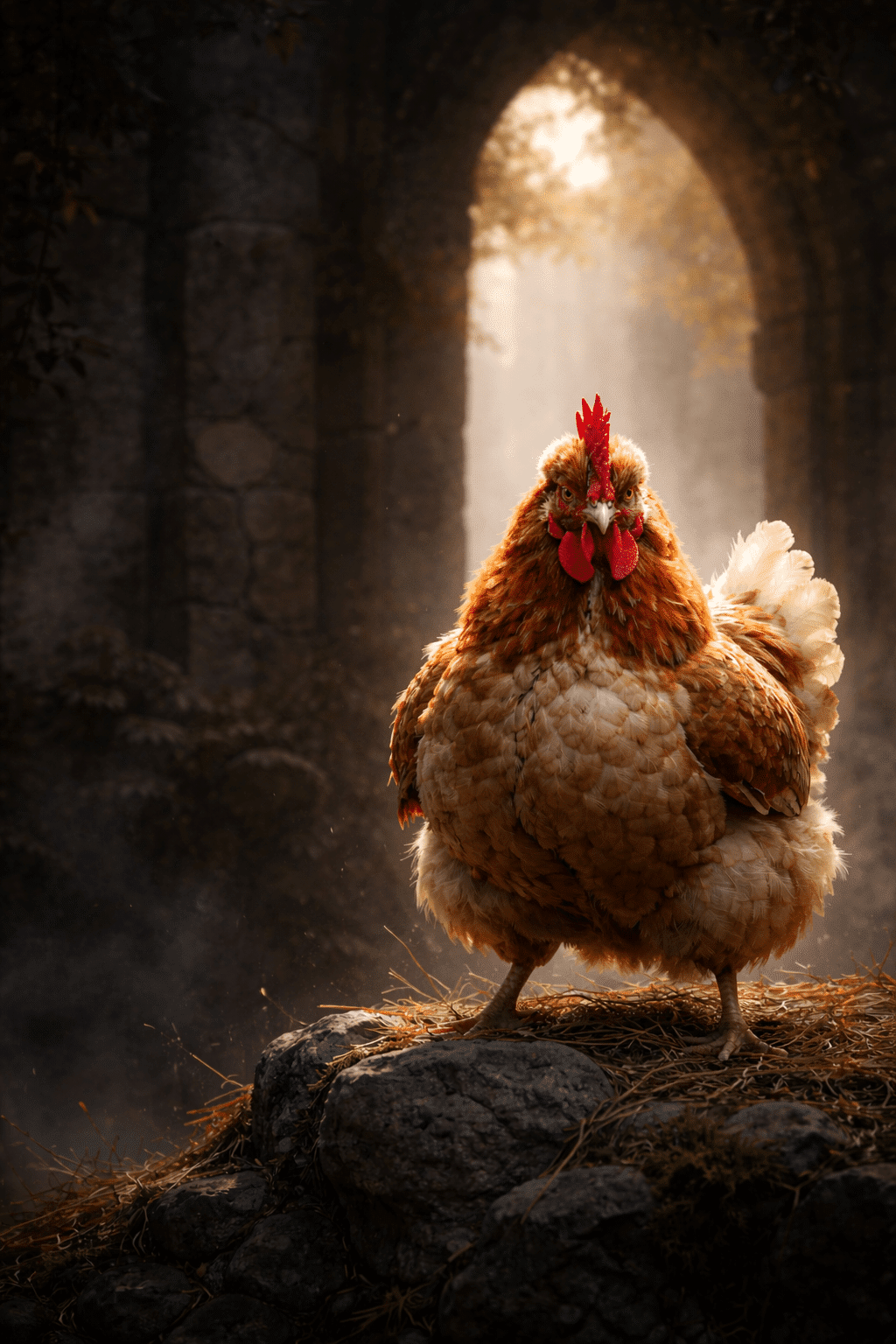
If you have never seen a broody hen, elegance does not form part of the experience. She sits on a nest, puffs herself up, glares at anything that comes near her, and pecks aggressively at hands that dare to exist within her general vicinity. Her entire posture radiates offended territorial stubbornness rather than mystery or depth, which is not exactly the energy romance novels aim for when they describe a tortured immortal male.
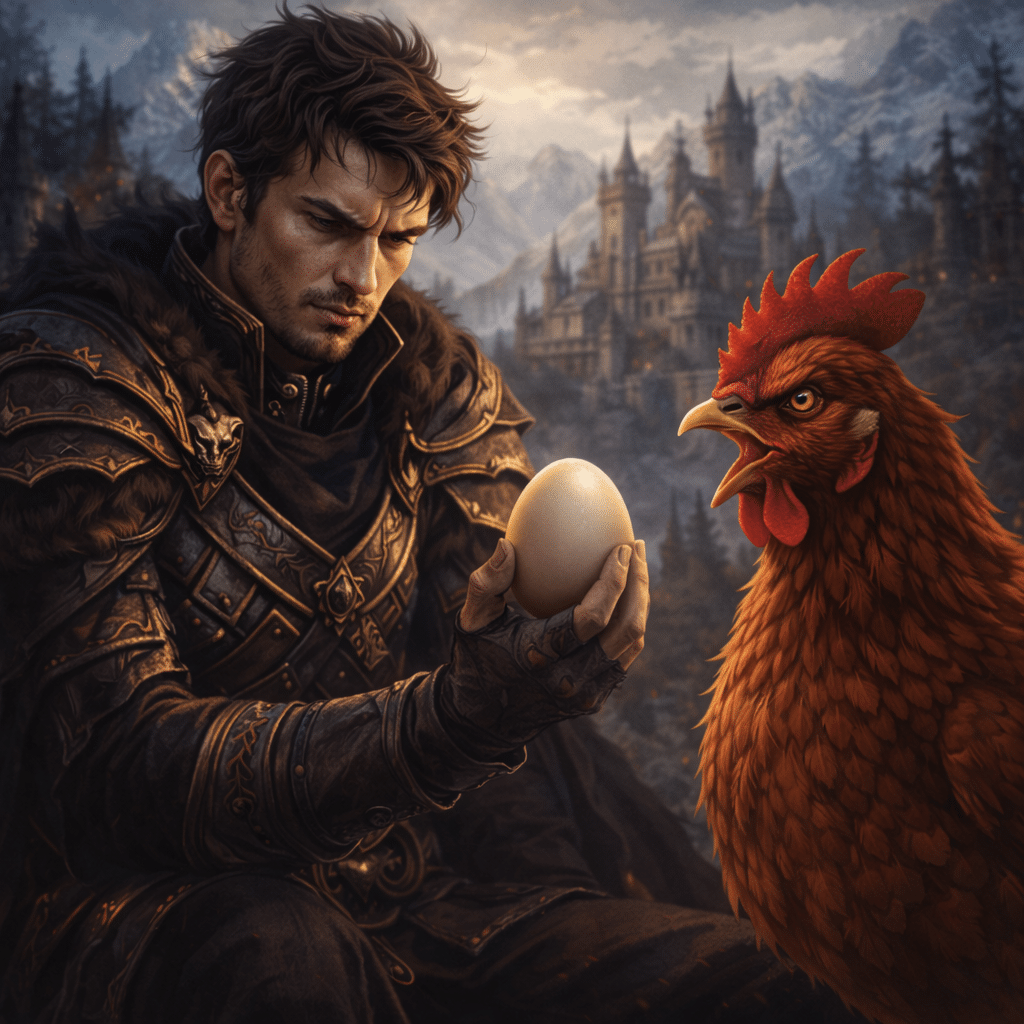
Somewhere between one homesteading article and another, my brain connected that image to the way romance novels use the word brooding, and it never asked my permission. Now, every time a male love interest broods, my mind supplies feathers instead of tortured depth. The quiet intensity collapses into the image of a cranky chicken sitting on a nest and daring the world to test her patience.
The first time this happened inside an actual book, I laughed out loud and startled myself. A character leaned against a wall, glowering into the middle distance with what the author clearly intended as broody energy. My internal narration added ‘chicken’, and the emotional tone did not survive the transformation.
I assumed the association would pass if I ignored it long enough. That assumption turned out to be wildly optimistic. Once a word loses its dignity inside your brain, it never really gets it back, and every subsequent appearance reinforces the new meaning instead of weakening it.
Now when an author writes that a man brooded in silence, my mind adds feathers and a defensive peck without consulting me. When a hero broods protectively over the heroine, the image upgrades itself into a territorial hen guarding her nest. When a tortured immortal broods in the shadows, my brain seats him on a pile of straw and supplies a glare that dares anyone nearby to try something.
The genre did nothing to deserve this, and the men certainly did nothing to deserve this either. My brain does not care about fairness, narrative intent, or genre dignity. It makes one absurd connection and treats it as canon.
Reader Brains Are Not to Be Trusted
This is the part of reading nobody warns you about. At some point, you read enough books, notice enough patterns, and absorb enough weird, unrelated information that your mind starts cross-wiring concepts without supervision. Words lose their original tone. Tropes pick up unintended associations. Serious scenes tip into accidental comedy.
Once that happens, there is no rollback option. The new meaning lodges itself into your internal reading experience and waits patiently to sabotage future scenes. No amount of maturity, restraint, or good intentions will make your brain give the word back.
Brooding used to carry weight for me, and it worked because it signaled emotional restraint, internal conflict, and simmering intensity. It implied something unresolved and quietly dangerous, which suited the kinds of stories I love to read. The word functioned because it carried a specific mood with it.
Now it carries poultry, and my brain refuses to cooperate with any attempt to restore the original tone. I still love these books. I still enjoy brooding heroes. I still understand exactly what the author intends when they use that word, even as my mental image betrays them.
Instead of tortured depth, I get territorial clucking. Instead of smoldering silence, I get a hen puffing her feathers and daring someone to test her. Instead of dangerous intensity, I get a very grumpy bird, and the emotional stakes never quite recover from the substitution.
The damage feels permanent, which is the most irritating part of the whole situation. Every time I learn a new fact from a completely unrelated part of my life, my brain scans my reading vocabulary for something else it can corrupt. The moment it notices a connection, even a stupid one, it lodges itself into my internal reading experience and waits patiently to ruin the next dramatic moment.
This is how reader brains work, whether we want them to or not. They do not respect genre tone, and they do not care about narrative stakes or authorial intent. They take one stray association and build a permanent internal joke around it.
Brooding fell victim to mine, and I know I am not alone in this. Every long-term reader I know has at least one word their brain has permanently sabotaged. Some people lost smirk. Others lost growl. A few lost released a breath I did not know I was holding.
I lost brooding, and it will never recover. From now on, brooding men are angry chickens to me, and I cannot unsee it or unread it. The word will never carry its original weight again inside my head.
This is not mockery, and it is not even really criticism. It is affectionate brain damage caused by too much reading and one badly timed homesteading misalignment. I still love the genre. I still love these stories. I still read them enthusiastically and without shame, even as my internal imagery undermines every tortured hero I meet.
I just picture a lot more poultry than the authors intended, and I have accepted that as my permanent reality.
My apologies if your brain is now broken now too 😔



Leave a Reply