

The Lizzie Grace Series
The Lizzie Grace series sits in a different emotional lane than most of Keri Arthur’s work. It trades high heat and urban chaos for witchcraft, community, and long arc character healing. The danger still bites, but the story builds tension through relationships, lore, and personal reckoning rather than nonstop violence.
This series works for readers who want magic with teeth, found family with depth, and a heroine who grows through grief, responsibility, and reluctant leadership.
Book Reviews



Series Overview
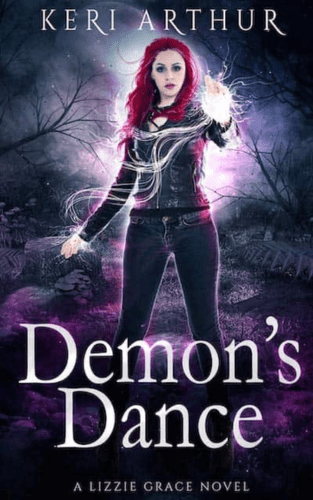
Lizzie Grace lands on a remote werewolf reservation in Australia while running from her family and the man they forced her to marry as a teenager. She arrives guarded, exhausted, and determined to stay off every supernatural radar she can avoid, carrying a deep distrust of both coven authority and her own instincts.
Her magic refuses to cooperate though, pulling her straight into a crime scene because it tries to stop a death and fails, binding her to a local werewolf pack, to a quiet supernatural enforcement network, and to a series of escalating threats that keep circling closer to her life no matter how hard she tries to stay invisible.
This story does not escalate into a world ending war. Pressure builds through consequence, proximity, and personal cost, with danger growing because Lizzie stays, helps, and refuses to look away when walking away would cost less.
The story roots itself in Australia in ways that shape how everything unfolds. Isolation, territory based power structures, and small community dynamics influence how the supernatural world operates here, creating a rhythm that does not borrow American urban fantasy scaffolding. Landscape, distance, and local politics shape both the stakes and the pacing.
For Australian readers, this series finally feels like home turf fantasy that uses place as part of the story instead of a decorative backdrop.
The Heroine: Lizzie Grace
Lizzie does not fit the glossy urban fantasy mold. She starts this series emotionally barricaded, distrustful, and determined not to owe anyone anything, shaped by trauma without letting that trauma define her limits.
She leads through grit, competence, and a refusal to abandon people who need her. Her instincts run sharp, and her judgment holds steady even when the situation turns chaotic. She does not create the disasters that unfold around her. Her magic drags her into them, and she stays because leaving would cost someone else their life.
Under pressure, she adapts, makes hard decisions without theatrical hesitation, and keeps moving forward even when she cannot stop what is coming. The story never punishes her for incompetence. It tests how much weight she can carry when the world refuses to slow down for her.
Her growth arc centers on reclaiming agency after institutional betrayal, learning how to trust again without surrendering autonomy, building a chosen family that does not demand obedience, and redefining power outside coven politics. This series rewards patience because Lizzie’s strength unfolds in layers rather than dramatic explosions.
Worldbuilding and Magic System
The magic in this series centers on witchcraft, covens, ley lines, and ritual power, leaning grounded rather than flashy. Rules matter here, and consequences stick. Arthur builds a supernatural ecosystem where witches, werewolves, vampires, fae, and ancient entities intersect inside a small town framework that feels lived in rather than staged.
The magic system emphasizes cost, balance, and long term consequence, with ritual effects that accumulate instead of resetting between books. Coven politics and territorial power struggles shape both the conflicts and the solutions, reinforcing the sense that power always carries a price.
Found Family and Community Arc
This series lives and dies on its found family dynamics. Lizzie forms alliances with people who do not fit into tidy supernatural hierarchies, and those relationships grow through shared danger, quiet loyalty, and earned respect rather than instant trust.
The emotional spine of the series rests on rebuilding trust after betrayal, choosing community over isolation, protecting people who cannot protect themselves, and creating belonging without submission. Arthur delivers that payoff steadily across multiple books instead of relying on one dramatic emotional climax.
Romance Structure and Heat Level
The romance runs slow and deliberate, keeping emotional stakes higher than sexual stakes. Lizzie does not jump into intimacy as a coping mechanism, and she refuses to trade vulnerability for safety. She protects her boundaries, demands respect, and treats trust as something that must be built rather than assumed.
The romance supports character growth instead of hijacking it. Heat stays moderate and secondary to the main plot, which will feel quieter to readers who want constant sexual tension but deeply satisfying to readers who care about emotional credibility.
Tone and Reader Fit
This series blends coziness with menace, layering small town rhythms, ritual scenes, and community meals over supernatural violence, moral ambiguity, and political threats. Danger never disappears. It just moves closer to home.
It fits readers who enjoy witch centric urban fantasy, found family narratives, slow burn romance, long form character arcs, lore heavy magic systems, and emotional recovery stories. Readers who want nonstop action or high heat from page one will not find that here.
How It Compares to Keri Arthur’s Other Series
Lizzie Grace reads softer than Riley Jenson and Dark Angels, carrying less erotic intensity and more emotional introspection. Where Riley Jenson thrives on chaos and confrontation, Lizzie Grace builds tension through restraint, consequence, and relational stakes.
Readers who bounced off Arthur’s earlier high heat series often connect strongly with this one because it offers a different entry point into her storytelling style.
Reading Order and Series Status
The Lizzie Grace series follows a strict chronological order, with each book building directly on the last. Skipping entries breaks emotional continuity and undercuts the long arc payoff.
Arthur designed this series as an ongoing narrative rather than a collection of standalones, which gives the character growth and worldbuilding space to accumulate rather than reset.
Why This Series Works
This series succeeds because it refuses to rush emotional recovery or shortcut trust. Lizzie does not heal through romance. She heals through work, boundaries, and community accountability.
The stakes stay personal even when the threats turn supernatural, which keeps the tension grounded instead of abstract. If you want a witch series that respects trauma, rewards patience, and delivers earned power rather than instant dominance, this one belongs on your reading list.
New Series in the Lizzie Grace World: The Black Lantern Series

What we know now…
Keri Arthur is launching a new spinoff set in the Lizzie Grace world, and it looks like a smart expansion rather than a simple side project. Instead of revisiting the same central arc, she turns toward one of the most intriguing institutions in that universe: the Black Lantern Society.
Longtime Lizzie Grace readers will already know the Dark Lantern Society. It played a pivotal role in helping Lizzie escape her family’s control and break free from the life forced on her. That history gives the new series built-in weight before the first page even begins.
The opening book, Dark Secrets, introduces Hanna Kang, an investigator for the Black Lantern Society, alongside her shapeshifter partner Ginny Baker. Their latest assignment should be routine. Instead, a kidnapping, a murdered bridesmaid, and another missing woman pull them into a deeper and more dangerous case.
What makes this especially promising is the shift in perspective. Lizzie Grace showed readers the wider world through a heroine rebuilding her own life. The Black Lantern Society series appears ready to explore how power gets challenged from inside a covert organization built to right wrongs by whatever means prove necessary.
That opens the door to investigations, morally grey decisions, and a closer look at the supernatural systems operating behind the scenes. It also gives Arthur fresh room to deepen the world without repeating Lizzie’s journey.
For readers who loved the Lizzie Grace books, this looks less like leaving the series behind and more like stepping into the next corridor of the same house.
More to come about Dark Secrets and The Black Lantern Series… it will be released July 17, 2026!