Book Reviews


The World, the Ethics, and Why It Endures
What Valdemar Is
Valdemar is not a single story, a single hero, or a single era. It is a living fantasy world that unfolds across centuries, shaped by the choices people make when power demands accountability. Magic exists, but ethics govern it. Authority exists, but responsibility defines it.
At its core, Valdemar asks one persistent question: What does it cost to do the right thing when doing so carries real consequences?
This universe values interior strength as much as external action. Characters face moral pressure, emotional weight, and the long shadows of history. Institutions change. Traditions adapt. Victories solve one problem and often create another. The world remembers.
That memory gives Valdemar its depth. Events ripple forward. Decisions matter long after the moment passes. Readers do not simply watch a legend rise. They witness a society grow, fracture, heal, and grow again.
Valdemar also centers choice. Companions do not reward worthiness. They answer alignment. Leadership does not crown heroes. It burdens them. Power never arrives cleanly, and it never leaves people unchanged.
How Valdemar Tells Stories Differently
Valdemar refuses a straight line.
Instead of following one protagonist through a fixed timeline, the universe moves across eras, regions, and crises. Each sub series introduces new heroes and heroines who face problems specific to their time. The world remains familiar, but the questions evolve.
This structure keeps Valdemar alive. No character outlives their relevance. No arc stretches beyond its truth. When one story ends, the world continues without nostalgia or stagnation.
It also allows Mercedes Lackey to explore strength in many forms. Some heroines lead nations. Others swear oaths, master crafts, or hold communities together under strain. None of them exist to echo another. Each story examines a different way power shows up and a different way it demands accountability.
For readers, this approach removes pressure. There is no single correct entry point. No obligation to read everything in order. Valdemar invites exploration rather than completion.
That invitation explains why the universe still feels fresh decades later. It grows outward instead of forward. It trusts readers to care about people rather than prophecy. It allows women to anchor stories without forcing them into one mold of heroism.
In the sections that follow, I focus on the Valdemar series that most strongly align with this site’s core values. These are the stories where women claim agency, endure consequence, and shape the world through earned power rather than inherited destiny.
The Heart of Valdemar
Several elements give Valdemar its distinct emotional core, and they work together rather than competing for attention.
Choice sits at the center of everything. Companions do not select heroes as rewards for virtue or power. They answer alignment. A person stands before that choice honestly, or not at all. This framework removes spectacle and replaces it with responsibility. Once chosen, characters cannot hide behind destiny. They must live with the consequences of who they are.
Leadership in Valdemar also carries weight. Authority never arrives as a prize. It arrives as obligation. Rulers, Heralds, and commanders face limits, scrutiny, and moral tradeoffs that never vanish simply because the story demands victory. Compassion matters. Accountability matters. The world responds when either one fails.
Community reinforces these themes. Found family plays a central role, but it never erases conflict or pain. Relationships require work. Trust must be rebuilt. Loyalty demands effort. Valdemar treats connection as strength without pretending it comes easily.
Together, these elements create a universe that feels emotionally honest. Valdemar does not reward domination. It rewards endurance, clarity, and the courage to choose again when the cost rises.
Who Valdemar Is For
Valdemar speaks most strongly to readers who value character driven fantasy over plot first spectacle. These stories prioritize growth, ethics, and consequence. They ask readers to sit with discomfort and reward them with earned change rather than quick triumph.
This universe also resonates deeply with readers who seek women led stories grounded in agency. Valdemar does not frame female power as exceptional or symbolic. Women lead because they must. They grow because the world demands it. Their stories unfold with patience and respect for complexity.
Readers who enjoy grim nihilism or relentless brutality may find Valdemar gentler in tone, but not lighter in substance. The stakes remain real. Loss leaves scars. Hope exists because characters work for it, not because the narrative grants it freely.
For readers who want fantasy that still holds up, that trusts emotional intelligence, and that believes responsibility matters, Valdemar continues to deliver.
Entering Valdemar Through Its Heroines
Valdemar contains many entry points, but not all of them align equally with this site’s focus. Rather than presenting the universe as a checklist, I highlight the series that best reflect its strongest values around women, agency, and earned power.
These stories do not simply introduce Valdemar. They define it.
Arrows of the Queen
The Emotional Foundation of Valdemar
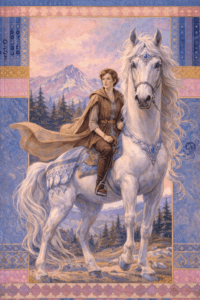
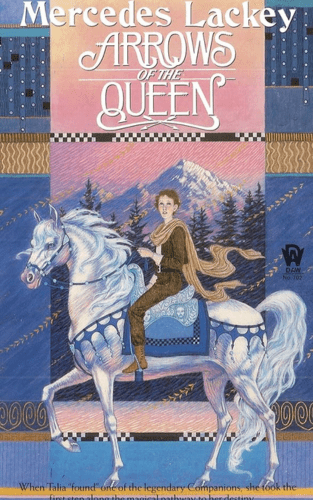
Arrows of the Queen stands as one of the most enduring entry points into Valdemar, not because it explains the world exhaustively, but because it establishes its moral center with clarity and restraint.
Talia enters the story carrying fear, trauma, and deep uncertainty. She does not arrive ready to lead or eager for power. Instead, she learns what responsibility demands through discipline, mentorship, and painful self awareness. Her growth unfolds slowly and honestly, without shortcuts or narrative forgiveness.
This trilogy introduces many of Valdemar’s defining ideas. Choice matters. Support does not erase fear. Authority requires emotional labor as much as strength. Talia earns her place not through destiny, but through endurance and commitment to doing what the role requires.
For readers new to Valdemar, this arc offers grounding rather than overwhelm. It invites investment through empathy, and sets expectations clearly. Power carries weight here. Growth takes time. The world will not bend simply because the heroine suffers.
That foundation explains why Arrows of the Queen still resonates decades later and why it remains one of the most effective introductions to the universe as a whole.
Tarma and Kethry
Oath Bound Power and Chosen Paths
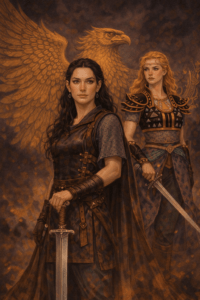
Tarma and Kethry represent one of Valdemar’s clearest expressions of unapologetic female agency. These stories strip power down to choice, oath, and consequence, with no interest in softening the edges.
These heroines actually predate Valdemar. Mercedes Lackey first wrote their stories in the early 1980s as standalone sword and sorcery fiction (1), publishing them in feminist fantasy and heroic fantasy venues before Valdemar reached print. When Arrows of the Queen launched in 1987 and the Valdemar world took shape, she later folded Tarma and Kethry into that universe retroactively. Valdemar did not create them. Valdemar absorbed them.
That origin matters. These women do not arise from institutions or destiny. They arrive already formed by oath, loss, and refusal to surrender agency. Their stories carry the lineage of feminist sword and sorcery into Valdemar’s ethical core rather than emerging from it.
Tarma survives genocide and binds herself to a shamanistic vow of vengeance and protection. Kethry brings magic, talent, anger, and hard learned caution into a partnership that never requires hierarchy to function. They choose each other. They choose their work. They choose the price they will pay to keep their oaths intact.
Their strength does not come from institutions or destiny. It comes from consent and commitment. Every mercenary contract matters. Every oath binds. When they take a job, the story follows through on what that decision costs them physically, emotionally, and morally. Some of these stories lean dark. Others turn sharp, witty, and unexpectedly funny (Warrl!!). The tone runs the full gamut, which keeps their arc human rather than monolithic.
These books also refuse a common fantasy shortcut. Partnership does not dilute authority. Tarma and Kethry operate as equals, even when their skills differ. The narrative never forces one woman to step back so the other can shine. Their power multiplies because they respect each other’s boundaries and competence.
Violence in these stories carries weight. Justice does not arrive cleanly. Survival requires strategy, restraint, and sometimes mercy that costs more than revenge. Tarma’s rigidity and Kethry’s impulsiveness clash often, and those clashes shape their growth rather than resolving neatly.
For this site, Tarma and Kethry fit perfectly. They exemplify chosen power, female solidarity without sentimentality, and strength that never asks permission. They do not seek approval from the world, and the narrative does not punish them for that refusal.
Readers who want women led fantasy without destiny, romance driven motivation, or moral hand waving will find these stories bracing, grounded, and deeply satisfying.
By the Sword
Claimed Authority and the Cost of Command
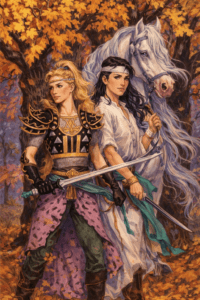
By the Sword shifts Valdemar into a story of openly claimed power. Kerowyn does not stumble into leadership, nor does anyone grant it to her out of obligation. She takes responsibility because no one else will, and then she proves she deserves it.
Kerowyn builds authority through competence, discipline, and refusal to abandon people who depend on her. She learns strategy. She learns logistics. She learns what leadership demands when ideals collide with survival. The narrative never treats command as glamorous. Every decision narrows her options and raises the stakes.
This book also stands apart because it allows ambition without apology. Kerowyn wants more than safety. She wants control over her fate and the ability to protect others at scale. The story respects that desire. It challenges her, tests her judgment, and forces her to adapt, but it never frames her ambition as a flaw that requires correction.
For readers who value military competence, earned command, and heroines who step forward instead of waiting to be chosen, By the Sword often becomes a standout. It shows Valdemar at its most pragmatic and reinforces the idea that leadership grows out of action, not intention.
Elspeth’s Arc
Fear, Growth, and Becoming Capable
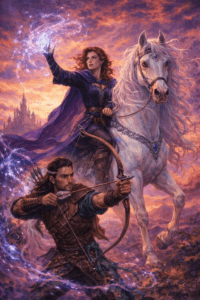
Elspeth begins her story constrained by spoiled entitlement in her childhood, and weighted down by expectation and a deep sense of inadequacy in her later life. Unlike heroines who start with clarity, she starts with avoidance. That choice makes her arc one of Valdemar’s most patient and rewarding.
Her journey unfolds across multiple books and eras, allowing space for failure, retreat, and recalibration. Elspeth does not conquer her fear in a single revelation. She confronts it repeatedly, sometimes poorly, and learns through consequence rather than affirmation.
This arc also expands Valdemar’s scope. Elspeth’s growth intersects with broader political and magical pressures, showing how personal development ripples outward. Her competence matters not only to her own survival, but to the stability of the world around her.
For readers who appreciate long form character development and heroines who earn confidence through persistence, Elspeth’s story offers depth and payoff. It rewards patience and reinforces one of Valdemar’s central truths. Capability grows through engagement, not avoidance.
Beyond the Core Heroines
Valdemar contains many additional series and perspectives for readers who want to explore further. Some arcs focus on male protagonists. Others operate as ensemble stories that broaden the world rather than deepen a single heroine’s journey.
These books add texture, history, and context. They enrich the universe without redefining its core values. Readers who fall in love with Valdemar often choose to explore these paths next, guided by curiosity rather than obligation.
This page centers the heroines who most strongly embody agency, growth, and earned power. The wider timeline remains available for those who want to follow Valdemar in every direction it offers.
How to Read Valdemar
Valdemar offers multiple ways in. Publication order, internal timeline order, and curated entry points all work, and no single path matters more than another.
Personally, I prefer reading any series/universes chronologically whenever possible. Experiencing the world unfold in order gives the full sense of history, consequence, and continuity that Valdemar does so well. That said, this approach is entirely optional. The universe was built to support flexible entry, and readers lose nothing by choosing the path that suits them best.
Readers seeking emotional grounding often start with Talia’s Arrows of the Queen. Those drawn to unapologetic agency tend to choose Tarma and Kethry’s The Oathbound. Readers interested in leadership and command often gravitate toward Kerowyn’s By the Sword, while those who enjoy long form growth may start with Elspeth’s Winds of Fate.
Valdemar rewards choice in reading just as it rewards choice in story.
Below, you will find several Valdemar reading orders, each housed in its own expandable section. Open any one to view the full list. You can sort each table by any column or use the search bar to find a specific book, character, or series entry. This structure lets you explore the universe at your own pace without overwhelming the page.
Valdemar does not ask for completion. It invites engagement. Choose the story that speaks to you, and let the world unfold from there.
Choose your adventure:
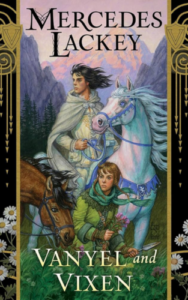
New Release Coming Soon: Vanyel and Vixen is scheduled for Jun 30, 2026.
I suspect it will fall after book 8 in the universe chronological order.
This reading order includes only the Valdemar universe books centered on female leads. It focuses on stories where women drive the narrative, claim agency, and shape the world through earned power, without requiring engagement with the full timeline.
Reading Mercedes Lackey’s Valdemar universe in chronological order emphasizes historical continuity, long term consequences, and how events in one era shape those that follow. This approach offers a broader view of the world, but it is not required to understand or enjoy any individual series.
Reading the Valdemar universe in publication order reflects how the world was originally revealed, allowing themes, concepts, and institutions to develop in the sequence readers first encountered them. This approach offers context for the evolution of the universe, but it is not required to follow any individual arc.
These books collect stories written by authors other than Mercedes Lackey, all set within the world of Valdemar. They expand the universe by exploring different regions, time periods, and perspectives that do not appear in the main series.
These anthologies add texture and variety to the setting, but they do not replace or redefine the core narrative arcs. Readers can approach them as optional expansions that enrich the world without requiring familiarity with every Valdemar series.
I will not be reviewing these books. I have read all of them, and while some stories stand out as excellent and deeply memorable, others resonated less for me, which is true of anthologies in general. This section exists to support readers who want a broader view of Valdemar beyond the primary canon, not as a curated recommendation list.
This list is in publication order:
Side Note: This page/site focuses on heroine centered entry points and reader guidance. For full canonical detail, extended lore, and deep timeline research, the Valdemar Wiki remains the most comprehensive external reference.
The Sword and Sorceress anthology series played a significant role in creating space for female authors and female led sword and sorcery at a time when both were marginalized within the genre. Hundreds of writers contributed to these volumes, many of whom built lasting careers and helped shape feminist fantasy through their work.
Marion Zimmer Bradley herself also produced several influential fantasy works, including long running series and novels that helped bring women centered stories into mainstream genre visibility. Her editorial leadership on Sword and Sorceress and her broader publishing footprint shaped opportunities for many writers who might not otherwise have found early platforms.
Her personal actions and legacy remain deeply troubling and stand in stark contradiction to both the values reflected in many of the stories published under her editorial leadership and the trust placed in her by the genre community. Those actions do not diminish the work of the contributing authors, nor do they negate the cultural importance of the anthology series as a platform for women’s voices in sword and sorcery.
This reference acknowledges the historical role of Sword and Sorceress in the genre’s development while centering the authors and stories themselves, not the editor who curated them.