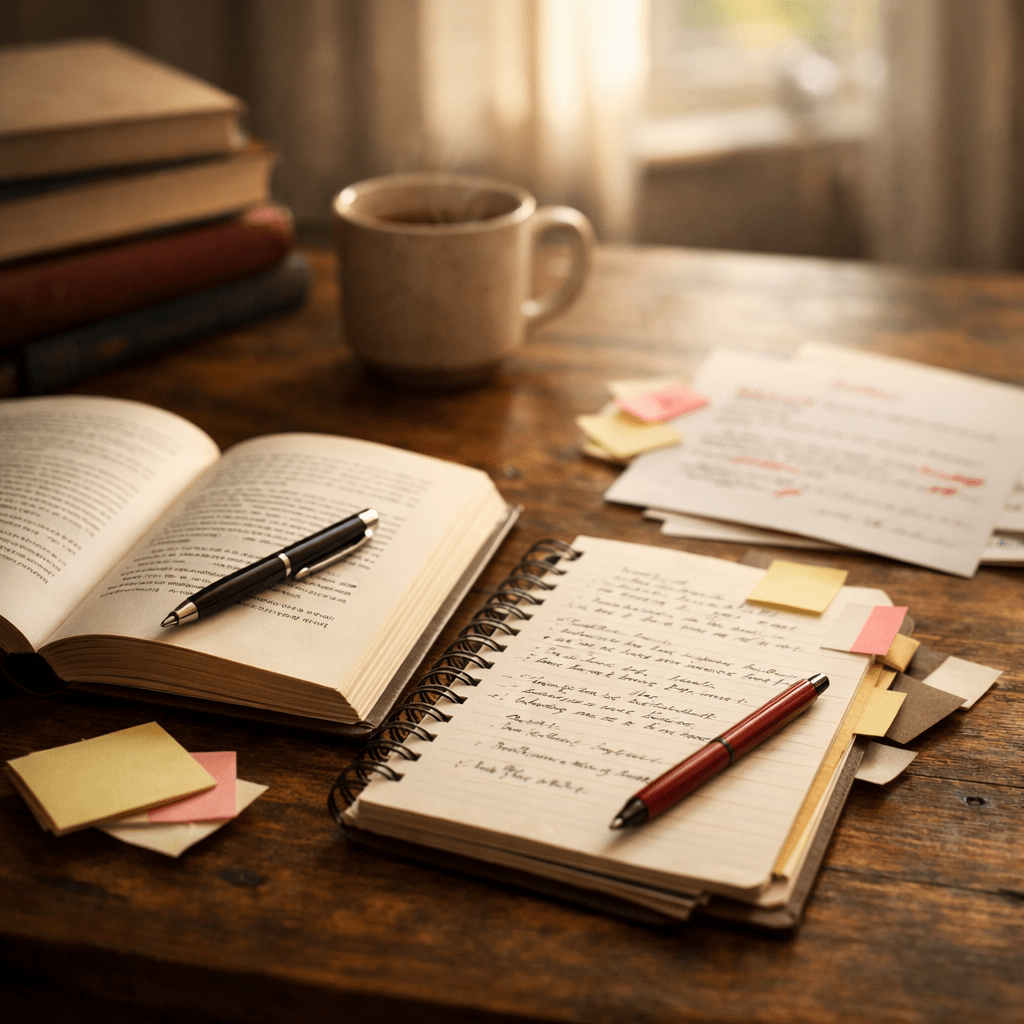
Why editing matters more than most readers realize.
Most readers cannot explain what editing actually is.
They do not think in terms of sentence structure, continuity, or technical accuracy. They are not watching for tense shifts or head hopping or punctuation errors. They are not mentally tracking pacing or clarity.
What they know is how the book feels.
They know when they are absorbed.
They know when something feels off.
They know when they are being pulled out of the story.
And when that happens, they rarely say, “This book needed an editor.”
They say things like:
“This was hard to get into.”
“I kept getting distracted.”
“I wanted to love this, but something kept breaking the flow.”
That “something” is almost always editing.
As a reviewer, I read a lot. As an editor and proofreader, I read differently. I read for story and character and emotional payoff, but I also read for the invisible structure underneath it all. The quiet polish that lets a reader sink into a world without tripping over the words.
When that structure is strong, you never think about it.
When it is weak, it becomes the loudest thing in the room.
The Reader Does Not See the Editing. They Feel It.
Good editing and proofreading does not announce itself.
A reader does not finish a chapter and think, “That comma placement was excellent.” They think, “That scene hit hard.” They think, “I need to keep reading.” They think, “I am invested.”
That is editing doing its job.
Clean editing creates flow. It creates ease. It creates trust. It allows emotion to land without friction. The story moves. The characters feel real. The world holds together.
When editing is missing or rushed, the experience changes. The reader stumbles. They reread sentences. They lose track of who is speaking. They get confused about timing or setting. They start noticing the mechanics instead of the magic.
And once a reader is aware of the mechanics, the spell is broken.
Immersion is fragile. Editing protects it.
Small Errors Break Big Immersion
One typo does not ruin a book. Everyone knows that.
But repeated errors do. Inconsistencies do. Sloppy construction does.
It is the accumulation that matters.
Things like:
- inconsistent character details
- shifting tense
- awkward or tangled phrasing
- dialogue punctuation mistakes
- sudden point of view changes
These are not dramatic flaws. They are quiet ones. And that is exactly why they are dangerous.
They create friction in the reading experience. Tiny interruptions that add up. A mental speed bump every few paragraphs.
The reader might keep reading, but they stop relaxing. And once a reader is no longer relaxed, they are no longer immersed.
That is the line editing protects.
Why Bad Editing Feels Personal to Readers
They give you their time. Their attention. Their imagination. They step into the world you created and trust you to carry them through it.
When a book is sloppy, it does not just feel messy. It feels careless. It feels unfinished. It feels like the author did not value the reader’s experience enough to polish the work.
That may not be true. Most authors care deeply. But perception matters.
From the reader’s chair, poor editing reads as: you did not finish the job.
That is why readers react strongly to it. Not because they are petty, but because they feel let down.
Good editing is respect.
The Difference Between a Good Idea and a Good Book
A strong concept will get a reader to open a book. Clean execution is what keeps them there.
I have read books with incredible premises that collapsed under weak editing. I have also read simple stories that shone because the writing was tight, clear, and controlled.
Editing does not replace talent. It supports it.
It sharpens what is already there.
It clarifies what is muddled.
It strengthens what is fragile.
It elevates what is good.
A good editor does not change your voice. They remove what is blocking it.
Why I Notice These Things as a Reviewer
When you read and review enough books, patterns emerge.
You start to see where pacing breaks. Where dialogue drags. Where description overpowers action. Where clarity slips. Where continuity fractures.
You also start to feel the difference between a book that was polished and a book that was rushed.
It is immediate.
And once you feel it, it becomes part of how you read forever. Not in a critical way, but in an aware way.
That awareness changes everything.
For Readers: This Is Why Some Books Feel Effortless
If you have ever finished a book and thought, “That just flowed,” you were feeling good editing.
If you have ever finished a book and thought, “I had to work too hard to get through that,” you were feeling the absence of it.
Editing is the difference between gliding and grinding.
It is not glamorous. It is not visible. But it is foundational.
For Writers: This Is Why Editing Is Not Optional
To be clear… I do NOT say this with judgment. I say it with respect.
Being indie is not an excuse for poor editing.
Being passionate is not a substitute for polish.
Being talented does not replace clarity.
Your story deserves to be read without resistance. Your characters deserve to be seen without distraction. Your readers deserve to stay immersed.
Editing is not about perfection. It is about professionalism.
And yes, readers can tell.
The Quiet Promise of This Blog
This space will always be reader-first.
It will be about stories, characters, worlds, and emotional impact. It will be about what works, what hits, and what lingers.
But it will also talk about craft. About clarity. About structure. About the invisible work that makes a book feel good to read.
Because those things matter. And because good stories deserve good treatment.
A Final Thought
Good editing is invisible.
Bad editing is unforgettable.
If you are a reader, now you know why some books feel like home and others feel like work.
If you are a writer, take this as encouragement, not criticism. Caring about editing is caring about your reader. And that is never the wrong choice.
And if you ever find yourself unsure whether your manuscript is ready, that is not a weakness. That is awareness.
That is where editors come in.
If you are a reader, I hope this gave you language for something you already feel. If you are a writer, I hope it reminded you that caring about editing is caring about your reader.
Leave a Reply